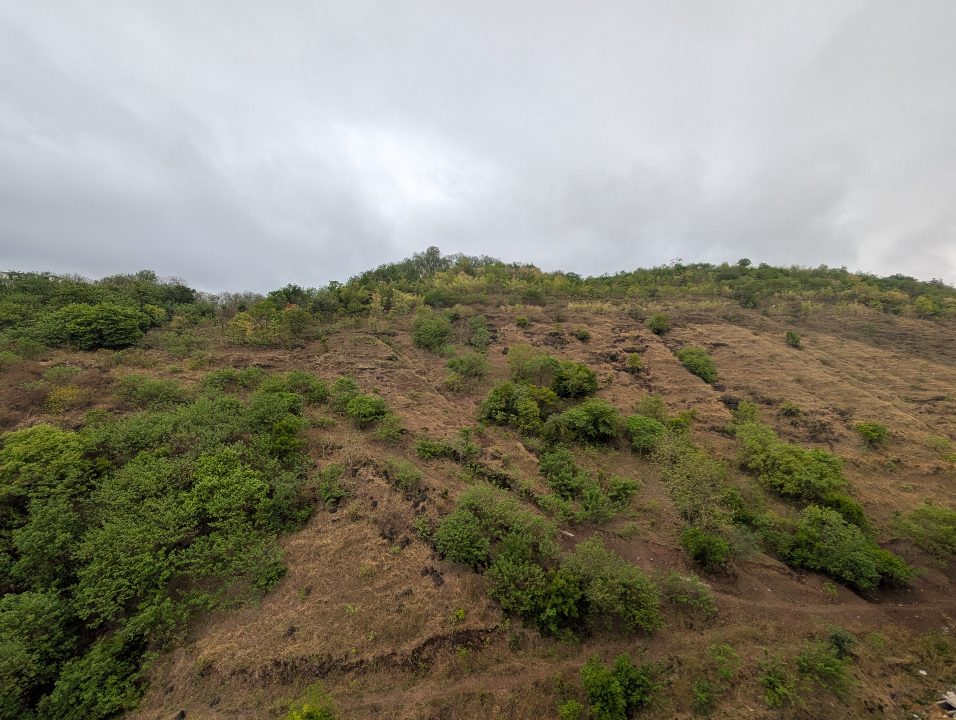
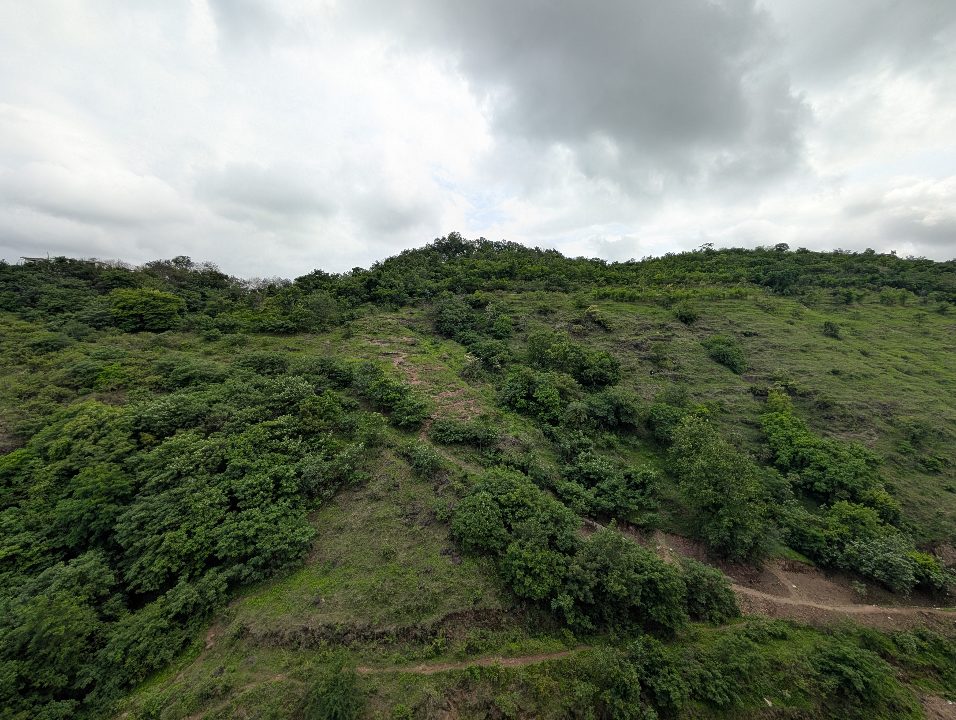
Baner Hill ~35 days ago
📷 ~35 days ago
Baner Hill, Pune — week of 2026-08-03
📷 This week
Earth Pulse Weekly · 2026-08-03 to 2026-08-09 · Baner, Pune

Earth Pulse Weekly: Baner's Air, Birds & Weather | 3 Aug 2026 – 9 Aug 2026

Generated from 5,305+ sensor readings · Published just now · 10 August 2026

93
Pulse Score ⓘ

Healthy week for Baner

Baner's breath this week was remarkably clean, with an average AQI of 16.6 and not a single hour dipping below 'Good' – a stark contrast to last year's average of 36.8. This clarity in our Sahyadri air, registering a delightful Pulse Score of 93, is intrinsically linked to the gentle persistence of rain. A cumulative 29.8mm fell across seven days, each droplet acting as a silent broom, sweeping away airborne particulates and gifting us visibility of the verdant slopes. Even as temperatures hovered around a comfortable average of 24.8°C, a pleasant 0.7°C warmer than the historical ERA5 average, the air remained a welcome respite.

Air quality
33
Bird activity
30
Clean hours
30

🔄 Compared to Last Week

How did this week (2026-08-03 – 2026-08-09) differ from the week before?

➡️
Air quality
Similar air quality pattern to last week — 0 spike days.
🐦
Bird activity
↑ 11% more detections than last week (+440 calls) — the soundscape was livelier.
🌡️
Temperature range
max +1.1°C, min +0.6°C vs last week.
⛅️
Rainfall
Significantly less rain than last week (75.2mm → 29.8mm).
📆
vs same week last year
AQI 20.2 pts cleaner than the same week in 2025 — a year-on-year improvement.
🌡️
Temperature vs last year
0.7°C warmer than the same week in 2025.

🌿 Ecological Signals This Week

What do the numbers imply about life on Baner Hill? Sensor data interpreted through an ecological lens.

🐦 With 82 species detected and an average AQI of 16.6, the cooler, rainy conditions in Baner are supporting abundant birdlife, with Ashy Prinias showing peak activity at dawn.
🌡️ The higher average temperature this week (24.8°C) compared to the historical average (22.4°C) might be influencing the activity patterns of insectivorous birds like the Common Tailorbird.
💧 29.8mm of rain spread over 7 days indicates consistent moisture, likely promoting insect emergence and thus fueling the high bird detection rates observed this week in the Western Ghats foothills.

💨 Air Quality — Baner, Pune

AQI range this week (EU scale · 0–100 ⓘ)
Low: 12High: 23
Avg AQI
16.6
EU scale
Good air hours ⓘ
100%
AQI ≤ 40
Spike days ⓘ
0
AQI > 100
Humidity
89%
Peak: 99%

🌡️ Temperature & Rain — Baner, Pune

High
29.58°
°C this week
Low
22.7°
°C this week
Average
24.8°
°C
Total rain
29.8
mm · 7 days
🌧️
Rain cleared the air: 29.8mm over 7 days contributed to 100% Good air hours — rainfall acts as a natural particulate scrubber over Baner.
ERA5 Reanalysis · 1980–2021 · 42 years

🕰️ Historical Pulse: Week 32 in Context (1980–2021)

ERA5 is a global atmospheric reanalysis that reconstructs daily weather back to 1940. Earth Pulse uses 42 years of ERA5 data (1980–2021) for Baner Hill — giving local context that raw sensor data, which only began in 2022, cannot provide on its own.

Temperature vs 42-year norm
+2.4°C
vs 22.4°C historical average
Warmest equivalent week on record since 1980
Rainfall vs 42-year norm
-58.4mm
vs 88.2mm historical average
Drier than 83% of equivalent weeks since 1980

🐦 Birds of the Week — Baner Hill

🌟 Standout species this week
Common Tailorbird
Orthotomus sutorius
Detected 509 times this week at Baner Hill — recorded by the acoustic monitoring network.
Read the Common Tailorbird species profile →
🔊 Most active species
Ashy Prinia
Prinia socialis
Dominated the Baner soundscape with 1283 detections — 29% of all recordings this week.
Read the Ashy Prinia species profile →
Total detections
4465
Species heard
82
unique species
Peak hour
7:00 AM
IST

📊 Species Momentum — Baner Hill

How did each species trend compared to last week? ↑ more calls this week · ↓ fewer calls · → stable.

SpeciesThis weekvs last
Ashy Prinia
Prinia socialis
1283 calls +37%
Common Tailorbird
Orthotomus sutorius
509 calls +23%
Jungle Prinia
Prinia sylvatica
486 calls +22%
Red-wattled Lapwing
Vanellus indicus
274 calls -19%
🆕 Big Movers
↑ Green Sandpiper · 11 calls (+1000%)
↑ Indian Scops-Owl · 19 calls (+533%)
↑ Eurasian Moorhen · 59 calls (+321%)
✦ New Arrivals
✦ Green Sandpiper · 11 calls
✦ Oriental Skylark · 5 calls
✦ Departures
✦ Scaly-breasted Munia · last week: 9 calls
✦ Painted Francolin · last week: 8 calls
✦ Changeable Hawk-Eagle · last week: 6 calls

🆕 New to the Neighbourhood

🎉 First heard this week — not detected in the past 4 weeks
Greater Coucal
Centropus sinensis
The acoustic monitors at Baner Hill picked up this species for the first time in recent weeks. A welcome addition to the neighbourhood soundscape.
Meet the Greater Coucal →

🌳 Tree of the Week — Baner Hill

One of the trees growing on Baner Hill, identified by the Earth Pulse plant monitoring network.

🌳 Identified on Baner Hill
Karanj
Pongamia pinnata
Fabaceae
Karanj is a fast-growing nitrogen-fixing tree native to coastal and riverine habitats of the Indian subcontinent, and a characteristic species of the Western Ghats foothills. Its dense flowering attracts pollinators that support the insect prey base for Baner Hill's insectivorous birds.
💡
Karanj seed oil contains karanjin — a natural insecticide used in traditional Deccan agriculture for centuries before synthetic pesticides existed. The same oil is now being studied as a biofuel feedstock.
See all trees on Baner Hill →

🎵 Soundscape Health — Baner Hill South

Acoustic ecology from baner_south_01 — continuous soundscape monitoring facing Baner Hill. NDSI (Natural Sound Index) measures the balance of biophony (birds, insects, wind) vs anthrophony (traffic, construction, human noise). Higher = healthier soundscape.

NDSI avg this week ⓘ
0.472
Good soundscape · 337 readings
Range: 0.001 – 0.845
Bio vs Anthro balance ⓘ
Biophony
9.8e-6
vs
Anthrophony
3.9e-6
No rain detected in soundscape
🎵
Peak natural soundscape
Highest biophony-to-noise ratio at 3:00 PM IST — when natural sounds dominated most strongly.

✨ Moments That Mattered

🍃
Cleanest air hour
AQI 12
Fri, 7 Aug, 08:00 pm
🎶
Peak bird chorus
7:00 AM
Most active hour IST
🌙
Quietest night
AQI 12
Fri, 7 Aug, 10:00 pm
🌡️
Warmest night
24.63°C
Thu, 6 Aug
🌧️
First rain drop
1.2mm
Mon, 3 Aug, 05:00 am

📅 Same Week — Last 4 Years in Baner

Comparing the same dates (2026-08-03 to 2026-08-09) in previous years — all data from Earth Pulse sensor monitoring at Baner Hill.

YearAvg AQIAvg TempRain
2026 ★ 16.6 24.8°C 29.8mm
2025 36.8 ↑ hazier 24.1°C ↓ cooler 16.8mm
2024 15.1 ✓ cleaner 23.7°C ↓ cooler 58.1mm
2023 16.7 ↑ hazier 23.9°C ↓ cooler 14.6mm
2022 17.2 ↑ hazier 23.7°C ↓ cooler 104.4mm
Pattern across 4 years
  • AQI averaged 21.5 — this week was 4.9 pts cleaner ↓
  • Temperature averaged 23.8°C — this week was 1.0° warmer
  • Typical rain was 48.5mm — this week had 29.8mm

📲 Screenshot & Share

Screenshot any card below to share on WhatsApp, Instagram, or Twitter.

Earth Pulse · Baner
93
Pulse Score
Healthy week
2026-08-03 – 2026-08-09
🍃 Cleanest Air Hour · Baner
AQI 12
Fri, 7 Aug, 08:00 pm
www.earth-pulse.org
🌟 Bird of the Week · Baner Hill
Common Tailorbird
Orthotomus sutorius
509 detections this week
www.earth-pulse.org

🔮 The Week Ahead — Baner, Pune

🌡️ 22–26.4°C 🌦️ 20.8mm 98% rain probability

As we step into the coming week, the Earth Pulse beckons us to observe the delicate dance between the sky and the soil. Our forecast suggests a continuation of moderate temperatures (22–26.4°C) and a healthy 20.8mm of rain, with a high probability of precipitation. This moisture will undoubtedly continue to bless our air quality, but it also signals a shift in the symphony of our avian neighbors. The peak bird activity, observed at 7:00 IST with an impressive 4,465 detections across 82 species, might subtly alter its rhythm. The ever-vibrant Ashy Prinia, our most detected resident with 1,283 calls and a significant 37% surge in activity, will likely continue its chirping reign, while we anticipate the arrival of the wader, the Green Sandpiper, and the songster, the Oriental Skylark, adding new notes to our soundscape.

This week, the Earth Pulse has recorded a beautiful ecological connection: the life-giving rain not only quenches the land but also purifies our very air, maintaining an AQI that makes the Western Ghats truly shine. While the Scaly-breasted Munia, Painted Francolin, and the majestic Changeable Hawk-Eagle have momentarily departed our detection zones – a natural ebb and flow in the grand tapestry of life – the arrival of new species offers a promise of enduring biodiversity. Let us continue to listen, observe, and contribute, for every detection, every raindrop, every breath of clean air, is a testament to the resilience and beauty of our Baner environment.

Explore Earth Pulse

🌿 Get weekly reports in your inbox

One email every Monday morning. Baner's pulse, delivered.

No spam. Unsubscribe anytime.

📲 WhatsApp ✕ Share in LinkedIn

Frequently Asked Questions

What was the AQI in Baner, Pune this week?

EU AQI in Baner ranged from 12 to 23 this week (2026-08-03 to 2026-08-09), averaging 16.6. Values below 40 are "Good", above 100 are unhealthy. See full AQI history →

Which birds were detected on Baner Hill this week?

Earth Pulse detected 82 bird species at Baner Hill this week using BirdNET acoustic AI — 4465 total calls logged. Standout species: Common Tailorbird. See all species →

What was the temperature in Baner, Pune this week?

Temperatures in Baner ranged from 22.7°C to 29.58°C this week, averaging 24.8°C. See temperature history →

How unusual was this week's weather compared to historical records in Baner?

Earth Pulse holds 42 years of ERA5 climate reanalysis data for Baner Hill (1980–2021). This week's average temperature of 24.8°C compares to a historical norm of 22.4°C for this period. Explore 45-year climate →

How does this week compare to previous years in Baner?

Earth Pulse has monitored Baner since 2022. For the same week in previous years: 2025: AQI avg 36.8, temp avg 24.1°C, rain 16.8mm · 2024: AQI avg 15.1, temp avg 23.7°C, rain 58.1mm · 2023: AQI avg 16.7, temp avg 23.9°C, rain 14.6mm · 2022: AQI avg 17.2, temp avg 23.7°C, rain 104.4mm. Full climate history →