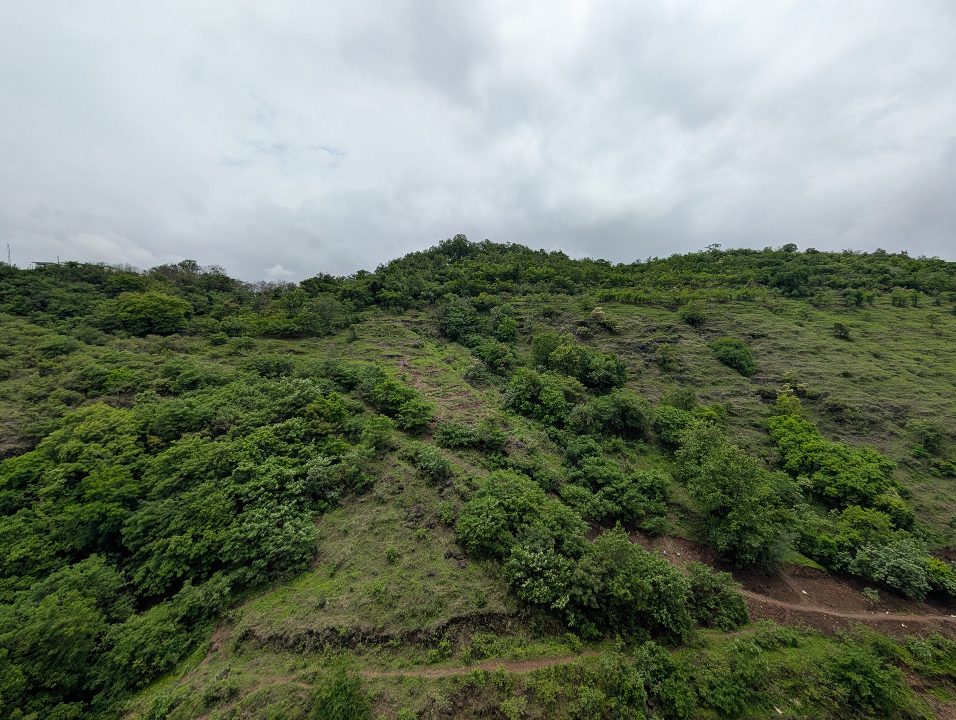
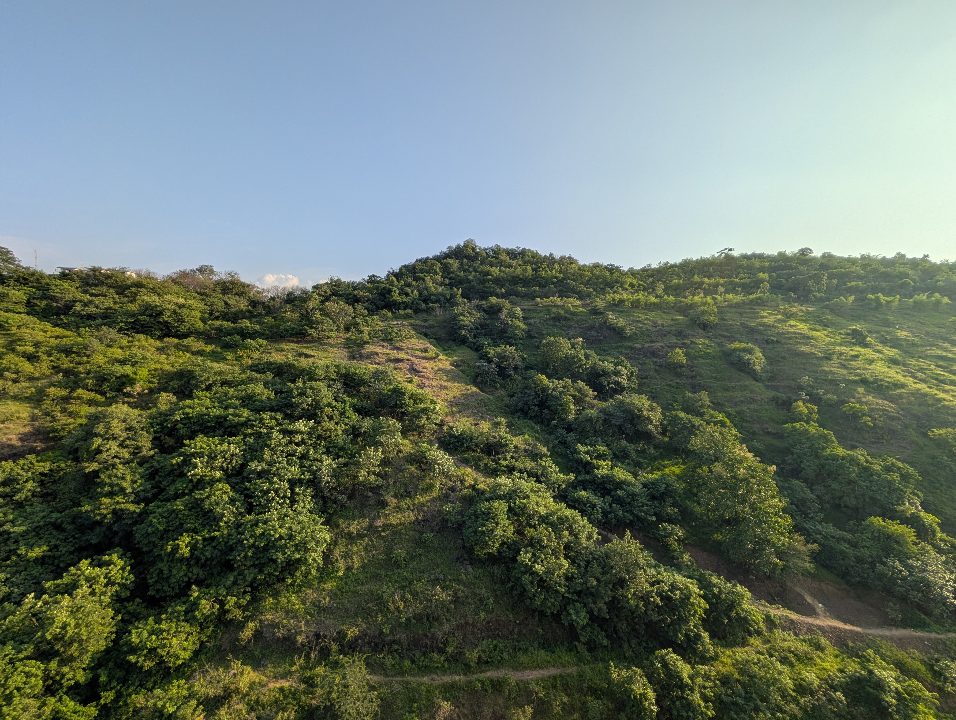
Baner Hill ~35 days ago
📷 ~35 days ago
Baner Hill, Pune — week of 2026-09-07
📷 This week
Earth Pulse Weekly · 2026-09-07 to 2026-09-13 · Baner, Pune

Earth Pulse Weekly: Baner's Air, Birds & Weather | 7 Sept 2026 – 13 Sept 2026

Generated from 4,652+ sensor readings · Published just now · 14 September 2026

79
Pulse Score ⓘ

Healthy week for Baner

This past week, Earth Pulse in Baner has hummed with a gentle rhythm, mirroring the quiet grace of the Oriental Magpie-Robin, our highlighted singer. Despite a mere 2.4mm of rain kissing the parched earth, a testament to our encroaching dry spells, the air quality largely danced in the 'Good' zone with an average AQI of 32.7. This respite, however, is a delicate balance, a fragile gift that makes us keenly aware of the Sahyadri's whispers in a warming world. The lingering warmth, with temperatures averaging a mild 25.6°C, kept our feathered friends active, their chorus peaking at 8:00 AM, a symphony orchestrated by the dawn.

Air quality
27
Bird activity
30
Clean hours
22

🔄 Compared to Last Week

How did this week (2026-09-07 – 2026-09-13) differ from the week before?

➡️
Air quality
Similar air quality pattern to last week — 0 spike days.
🎵
Bird activity
Steady bird activity — similar detection count to last week.
⬇️
Pulse Score
Pulse Score fell from 93 to 79 — Baner's ecological health dipped week-on-week.
😶‍🌫️
AQI average
↑ 99% hazier than last week (16.4 → 32.7).
🌡️
Temperature range
max +0.9°C, min -1.1°C vs last week.
⛅️
Rainfall
Significantly less rain than last week (6.4mm → 2.4mm).
📆
vs same week last year
AQI 10.5 pts cleaner than the same week in 2025 — a year-on-year improvement.
🌡️
Temperature vs last year
2.3°C warmer than the same week in 2025.

🌿 Ecological Signals This Week

What do the numbers imply about life on Baner Hill? Sensor data interpreted through an ecological lens.

🌡️ Elevated average temperatures 2.6°C above historical norms may be contributing to earlier than usual roosting times for diurnal birds like the Ashy Prinia.
💧 The minimal rainfall suggests lingering dry conditions, potentially influencing water-dependent insect populations and subsequently the foraging patterns of insectivorous birds like the Oriental Magpie-Robin.
🌬️ Despite a slight increase in temperature, good AQI hours suggest healthy air quality that supports consistent bird activity throughout the day.

💨 Air Quality — Baner, Pune

AQI range this week (EU scale · 0–100 ⓘ)
Low: 12High: 67
Avg AQI
32.7
EU scale
Good air hours ⓘ
72%
AQI ≤ 40
Spike days ⓘ
0
AQI > 100
Humidity
79%
Peak: 95%

🌡️ Temperature & Rain — Baner, Pune

High
31.68°
°C this week
Low
21.3°
°C this week
Average
25.6°
°C
Total rain
2.4
mm · 1 days
🌧️
Rain cleared the air: 2.4mm over 1 day contributed to 72% Good air hours — rainfall acts as a natural particulate scrubber over Baner.
ERA5 Reanalysis · 1980–2021 · 42 years

🕰️ Historical Pulse: Week 37 in Context (1980–2021)

ERA5 is a global atmospheric reanalysis that reconstructs daily weather back to 1940. Earth Pulse uses 42 years of ERA5 data (1980–2021) for Baner Hill — giving local context that raw sensor data, which only began in 2022, cannot provide on its own.

Temperature vs 42-year norm
+2.6°C
vs 23°C historical average
Warmest equivalent week on record since 1980
Rainfall vs 42-year norm
-16.7mm
vs 19.1mm historical average
Driest equivalent week observed since 1980

🐦 Birds of the Week — Baner Hill

🌟 Standout species this week
Oriental Magpie-Robin
Copsychus saularis
Detected 254 times this week at Baner Hill — recorded by the acoustic monitoring network.
Read the Oriental Magpie-Robin species profile →
🔊 Most active species
Ashy Prinia
Prinia socialis
Dominated the Baner soundscape with 1555 detections — 41% of all recordings this week.
Read the Ashy Prinia species profile →
Total detections
3812
Species heard
87
unique species
Peak hour
8:00 AM
IST

📊 Species Momentum — Baner Hill

How did each species trend compared to last week? ↑ more calls this week · ↓ fewer calls · → stable.

SpeciesThis weekvs last
Ashy Prinia
Prinia socialis
1555 calls +14%
Oriental Magpie-Robin
Copsychus saularis
254 calls 0%
Indian Robin
Copsychus fulicatus
193 calls +154%
Gray Francolin
Ortygornis pondicerianus
168 calls +113%
🆕 Big Movers
↑ Rufous Treepie · 38 calls (+1800%)
↑ Indian White-eye · 98 calls (+600%)
↑ Spot-breasted Fantail · 6 calls (+500%)
✦ New Arrivals
✦ Rufous Treepie · 38 calls
✦ Spot-breasted Fantail · 6 calls
✦ Red-whiskered Bulbul · 6 calls
✦ Departures
✦ Eurasian Kestrel · last week: 13 calls
✦ Tickell's Blue Flycatcher · last week: 6 calls
✦ Scaly-breasted Munia · last week: 5 calls

🆕 New to the Neighbourhood

🎉 First heard this week — not detected in the past 4 weeks
Greater Coucal
Centropus sinensis
The acoustic monitors at Baner Hill picked up this species for the first time in recent weeks. A welcome addition to the neighbourhood soundscape.
Meet the Greater Coucal →

🌳 Tree of the Week — Baner Hill

One of the trees growing on Baner Hill, identified by the Earth Pulse plant monitoring network.

🌳 Identified on Baner Hill
Karanj
Pongamia pinnata
Fabaceae
Karanj is a fast-growing nitrogen-fixing tree native to coastal and riverine habitats of the Indian subcontinent, and a characteristic species of the Western Ghats foothills. Its dense flowering attracts pollinators that support the insect prey base for Baner Hill's insectivorous birds.
💡
Karanj seed oil contains karanjin — a natural insecticide used in traditional Deccan agriculture for centuries before synthetic pesticides existed. The same oil is now being studied as a biofuel feedstock.
See all trees on Baner Hill →

🎵 Soundscape Health — Baner Hill South

Acoustic ecology from baner_south_01 — continuous soundscape monitoring facing Baner Hill. NDSI (Natural Sound Index) measures the balance of biophony (birds, insects, wind) vs anthrophony (traffic, construction, human noise). Higher = healthier soundscape.

NDSI avg this week ⓘ
0.474
Good soundscape · 326 readings
Range: 0.014 – 0.949
Bio vs Anthro balance ⓘ
Biophony
1.3e-5
vs
Anthrophony
6.0e-6
No rain detected in soundscape
🎵
Peak natural soundscape
Highest biophony-to-noise ratio at 10:00 AM IST — when natural sounds dominated most strongly.

✨ Moments That Mattered

🍃
Cleanest air hour
AQI 12
Sun, 13 Sept, 08:00 am
🎶
Peak bird chorus
8:00 AM
Most active hour IST
🌙
Quietest night
AQI 14
Sun, 13 Sept, 04:00 am
🌡️
Warmest night
24.91°C
Sat, 12 Sept

📅 Same Week — Last 4 Years in Baner

Comparing the same dates (2026-09-07 to 2026-09-13) in previous years — all data from Earth Pulse sensor monitoring at Baner Hill.

YearAvg AQIAvg TempRain
2026 ★ 32.7 25.6°C 2.4mm
2025 43.2 ↑ hazier 23.3°C ↓ cooler 20.3mm
2024 17.1 ✓ cleaner 23.9°C ↓ cooler 17.8mm
2023 22.5 ✓ cleaner 24°C ↓ cooler 62.6mm
2022 37.6 ↑ hazier 23.7°C ↓ cooler 103.2mm
Pattern across 4 years
  • AQI averaged 30.1 — this week was 2.6 pts hazier ↑
  • Temperature averaged 23.7°C — this week was 1.9° warmer
  • Typical rain was 51mm — this week had 2.4mm

📲 Screenshot & Share

Screenshot any card below to share on WhatsApp, Instagram, or Twitter.

Earth Pulse · Baner
79
Pulse Score
Healthy week
2026-09-07 – 2026-09-13
🍃 Cleanest Air Hour · Baner
AQI 12
Sun, 13 Sept, 08:00 am
www.earth-pulse.org
🌟 Bird of the Week · Baner Hill
Oriental Magpie-Robin
Copsychus saularis
254 detections this week
www.earth-pulse.org

🔮 The Week Ahead — Baner, Pune

🌡️ 21.3–29.9°C 🌦️ 14.4mm 84% rain probability

Looking ahead, the atmosphere promises a more generous embrace of water, with a forecast of 14.4mm of rain and an 84% probability. This influx, while welcome, hints at a continued struggle against the lower end of our historical rainfall averages. The temperature is predicted to nudge upwards, with highs reaching 29.9°C, a subtle yet significant shift that could subtly influence the delicate timing of the monsoon's ebb and flow. We'll be watching to see if this moisture rejuvenates the landscape and its inhabitants, especially as the Ashy Prinia, our most vocal sentinel, continues its determined surge in detection numbers.

The delicate dance between rain, temperature, and the vibrant life of our Western Ghats edge continues. This week, the Ashy Prinia’s vocal momentum, coupled with the arrival of the Rufous Treepie and Spot-breasted Fantail, paints a picture of adaptation and resilience. Yet, the departure of species like the Eurasian Kestrel and Tickell's Blue Flycatcher serves as a poignant reminder of the ever-present ecological shifts. Earth Pulse remains vigilant, listening to every pulse, every call, every breath of this precious land.

Explore Earth Pulse

🌿 Get weekly reports in your inbox

One email every Monday morning. Baner's pulse, delivered.

No spam. Unsubscribe anytime.

📲 WhatsApp ✕ Share in LinkedIn

Frequently Asked Questions

What was the AQI in Baner, Pune this week?

EU AQI in Baner ranged from 12 to 67 this week (2026-09-07 to 2026-09-13), averaging 32.7. Values below 40 are "Good", above 100 are unhealthy. See full AQI history →

Which birds were detected on Baner Hill this week?

Earth Pulse detected 87 bird species at Baner Hill this week using BirdNET acoustic AI — 3812 total calls logged. Standout species: Oriental Magpie-Robin. See all species →

What was the temperature in Baner, Pune this week?

Temperatures in Baner ranged from 21.3°C to 31.68°C this week, averaging 25.6°C. See temperature history →

How unusual was this week's weather compared to historical records in Baner?

Earth Pulse holds 42 years of ERA5 climate reanalysis data for Baner Hill (1980–2021). This week's average temperature of 25.6°C compares to a historical norm of 23°C for this period. Explore 45-year climate →

How does this week compare to previous years in Baner?

Earth Pulse has monitored Baner since 2022. For the same week in previous years: 2025: AQI avg 43.2, temp avg 23.3°C, rain 20.3mm · 2024: AQI avg 17.1, temp avg 23.9°C, rain 17.8mm · 2023: AQI avg 22.5, temp avg 24°C, rain 62.6mm · 2022: AQI avg 37.6, temp avg 23.7°C, rain 103.2mm. Full climate history →