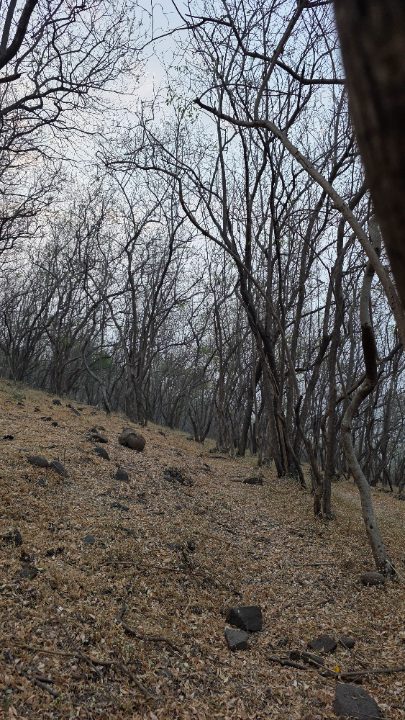
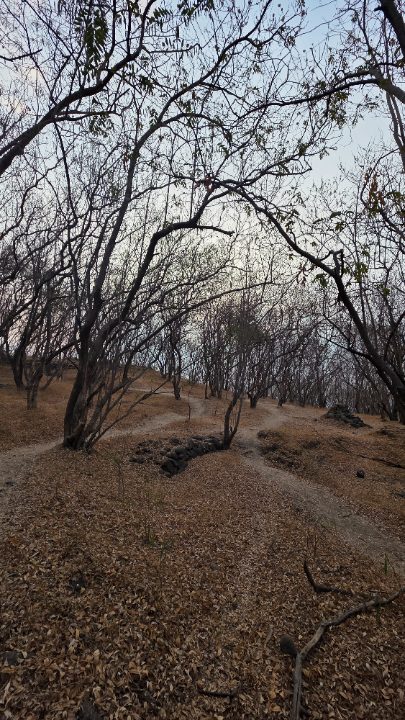
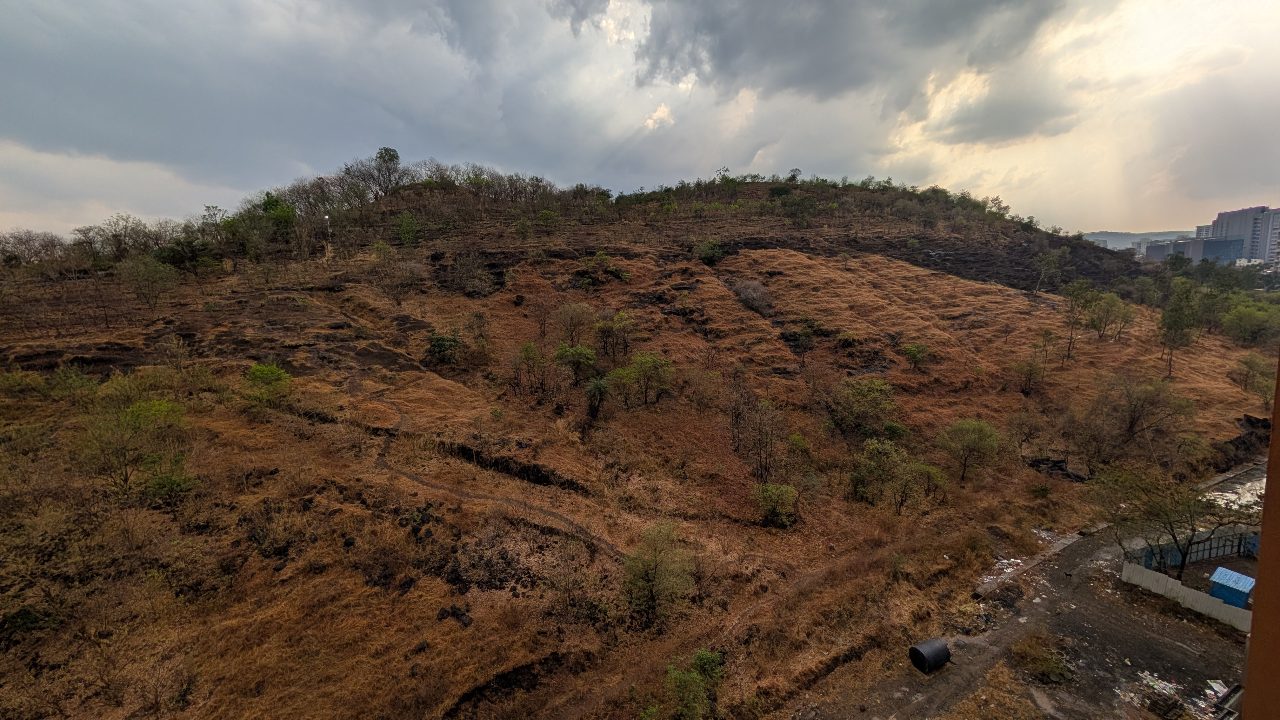
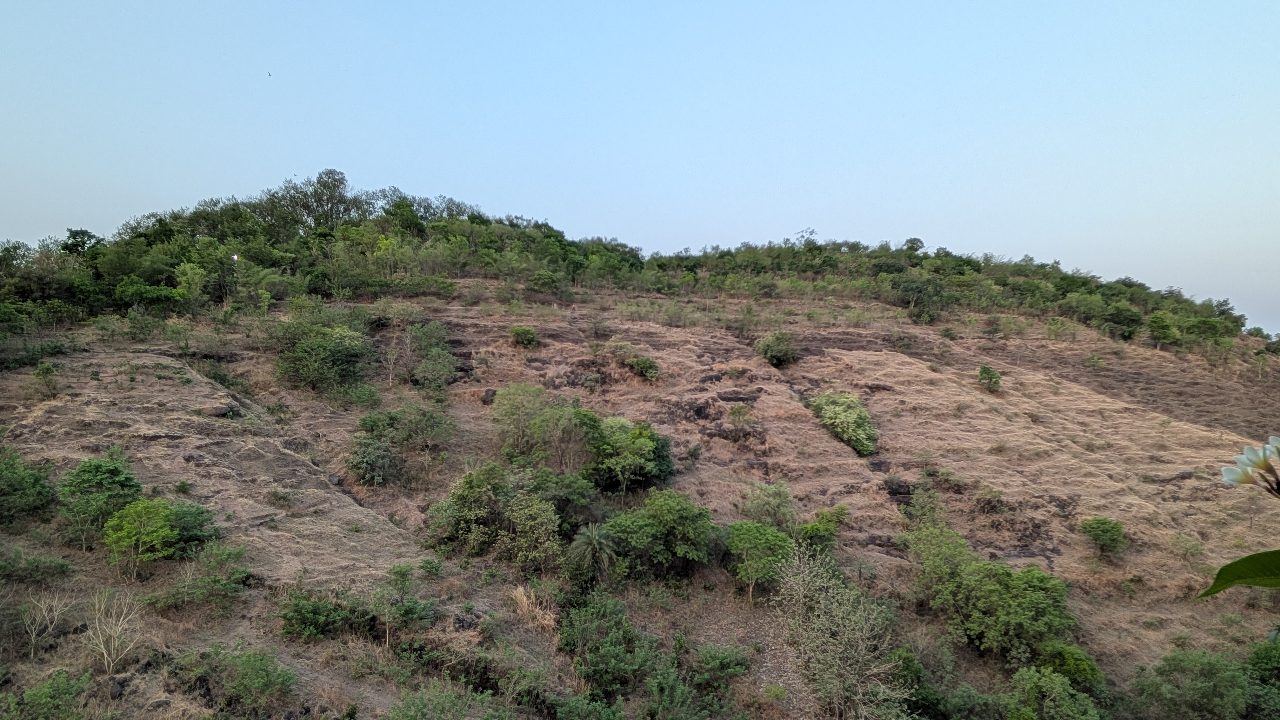
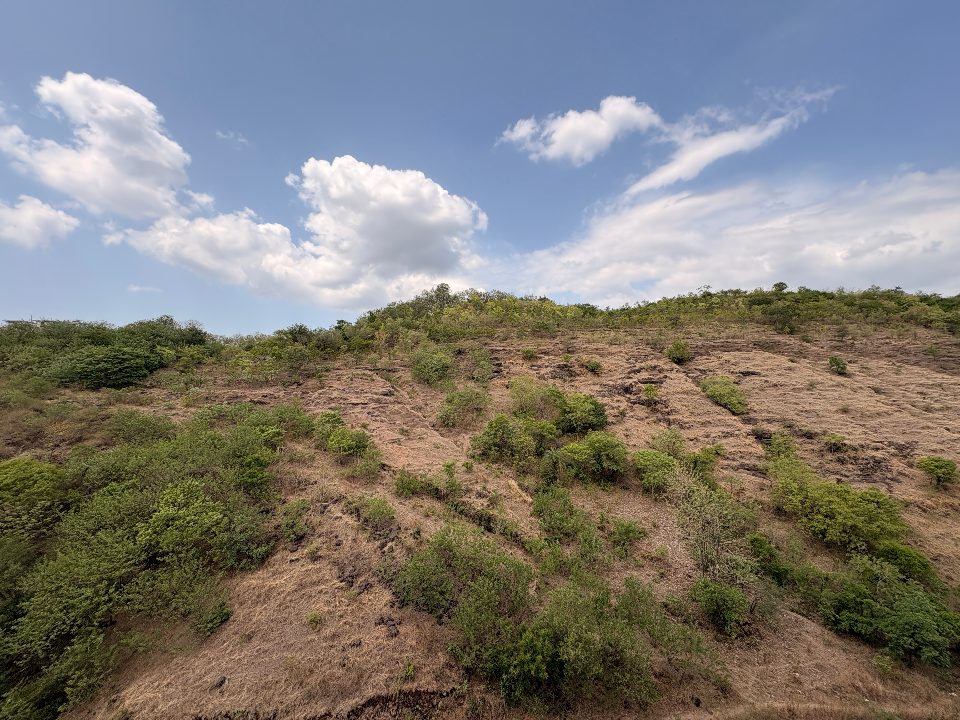
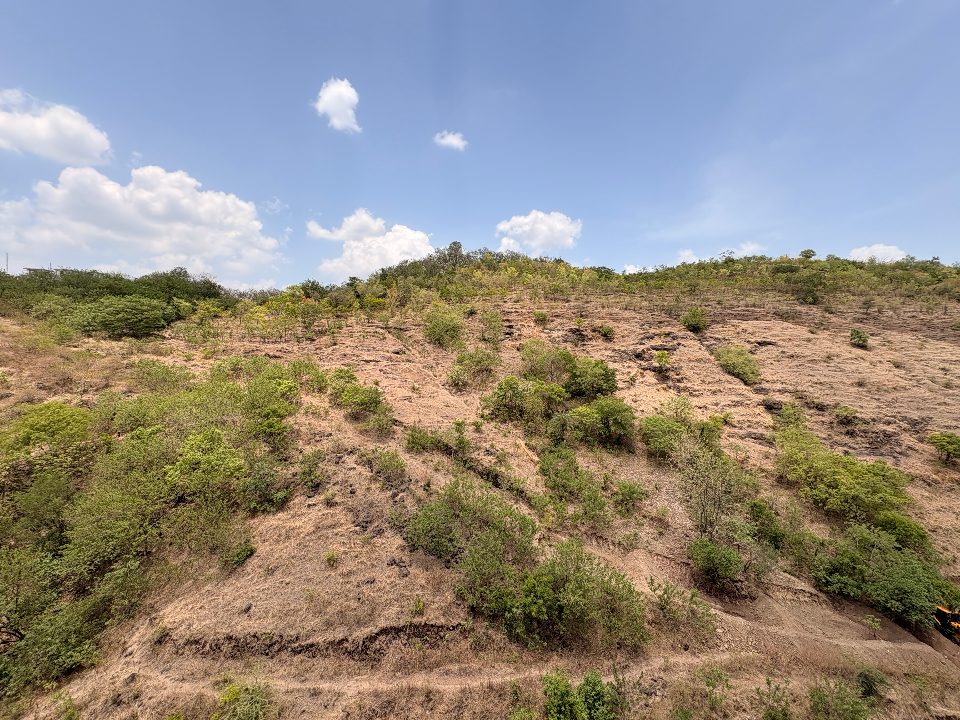
Our second morning on the hill was quieter than the first. There were no grand announcements or milestones. Just six volunteers who turned up early, picked up their tools and continued where we had left off the previous day. By the end of the session, we had dug two more contour trenches, slowly expanding the area that will eventually support native trees.
While taking a short break, an interesting discussion came up. Would filling the trenches with sugarcane waste or other agricultural residue help create compost naturally? It sounded like a sensible idea at first, but after discussing it with experienced volunteers, we realised it could create more problems than benefits. During the monsoon, these trenches are designed to collect rainwater. Organic waste submerged in stagnant water could decompose anaerobically, leading to unpleasant odours and potentially affecting the surrounding area.

Sometimes, knowing what not to do is just as valuable as knowing what to do. The biggest learning of the day, however, came away from the trenches. We had the opportunity to spend time with members of the Vrindavan initiative, a group that has been restoring another part of Baner Hill for more than 12 years. Their work speaks for itself. Over the years, they have planted more than 22,000 trees representing over 250 species, transforming what was once a barren landscape into a thriving patch of woodland. Rather than telling us where to dig or what to plant, they shared something far more important. They reminded us that planting is only the beginning. According to them, digging pits and planting saplings accounts for perhaps 2% of the effort. The remaining 98% lies in ensuring those saplings survive through their most vulnerable years.
Their advice was simple. Don't plant more than you can care for. Every volunteer should ideally adopt four to six trees and commit to looking after them for at least the first year.
Once the monsoon ends, each tree will need watering roughly once every six days until the following rains, unless a permanent water source is established. The saplings, they said, should be treated like babies. That one sentence stayed with all of us. The conversation also changed how we think about restoration.
The first layer will consist of native trees that can eventually reach around 10 to 12 feet. Once they establish themselves and begin creating shade, smaller trees and shrubs can follow. Those shrubs will attract insects, bees and butterflies, gradually rebuilding an entire ecosystem rather than simply increasing the number of trees on a hillside. That perspective changes everything. We also discussed the practical challenges ahead. Water will become our biggest responsibility after the monsoon. While there are encouraging possibilities, including exploring treated water and future storage options, those solutions will take time. Fortunately, the coming months give us an opportunity to plan before the dry season arrives. Another important takeaway was to keep our ambitions realistic. Instead of trying to plant hundreds of saplings in the first year, it may be wiser to focus on 25 to 40 trees, provided we can confidently commit to their survival. A living tree contributes far more than a planted tree that doesn't survive. Our conversations also reinforced another priority. Some of the older trenches on the hill already contain planting pits where previous saplings did not survive.
Before creating new restoration sites, reviving these existing areas deserves equal attention. Restoration is as much about learning from the past as it is about building for the future.
As we walked back down the hill that morning, carrying muddy tools instead of saplings, it felt like we had accomplished something bigger than digging two trenches. We had found mentors. More importantly, we had begun understanding that restoring a hill is not a one-season activity. It is a long-term commitment built on patience, consistency and care.
Our goal is no longer just to plant trees. It is to help a forest return.
Satellite NDVI timelapse — 5 years × 6 same-month snapshots — will appear here, powered by Planet Labs imagery, showing how Baner Hill's vegetation has changed season by season.