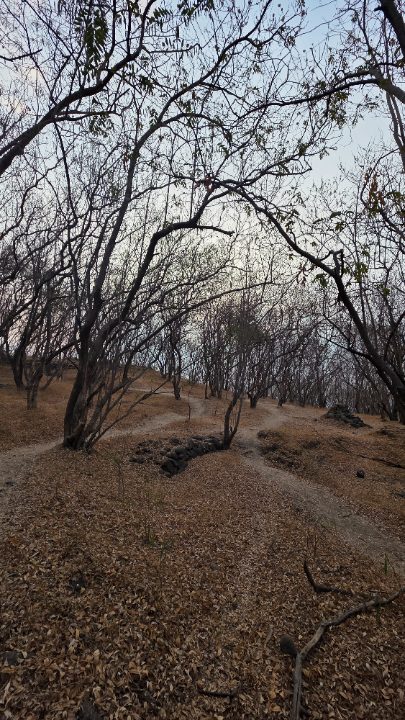
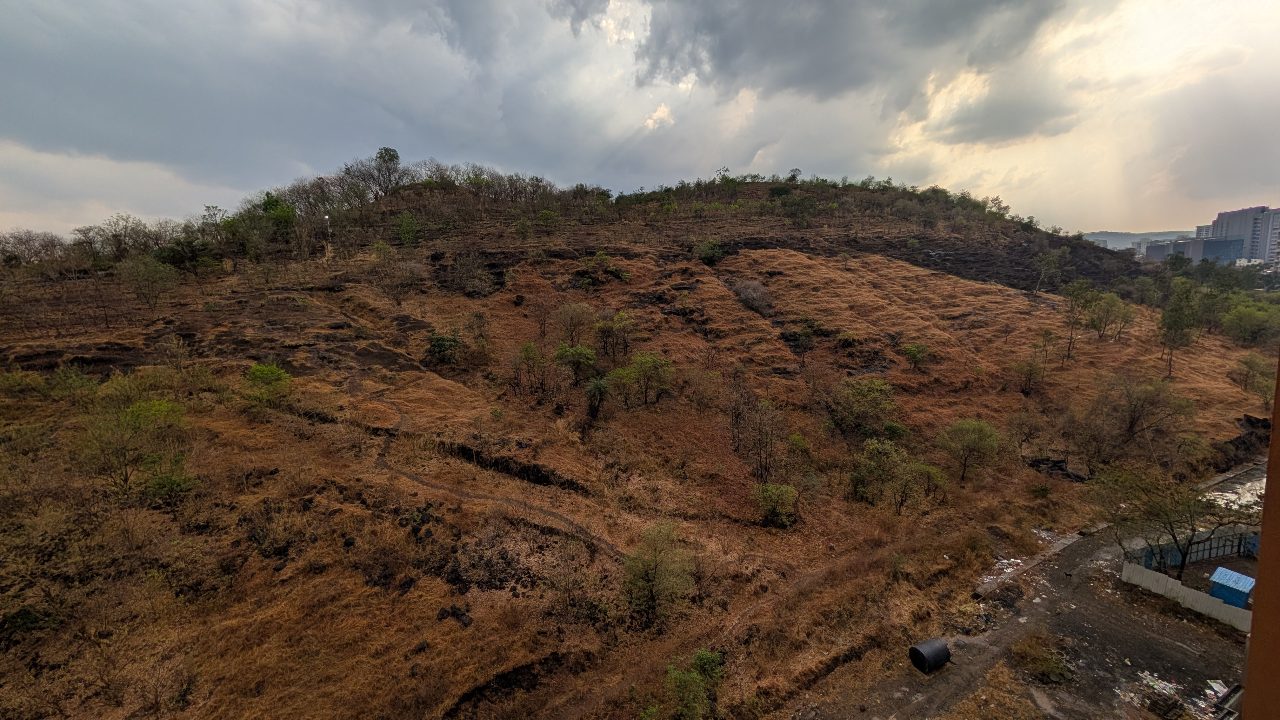
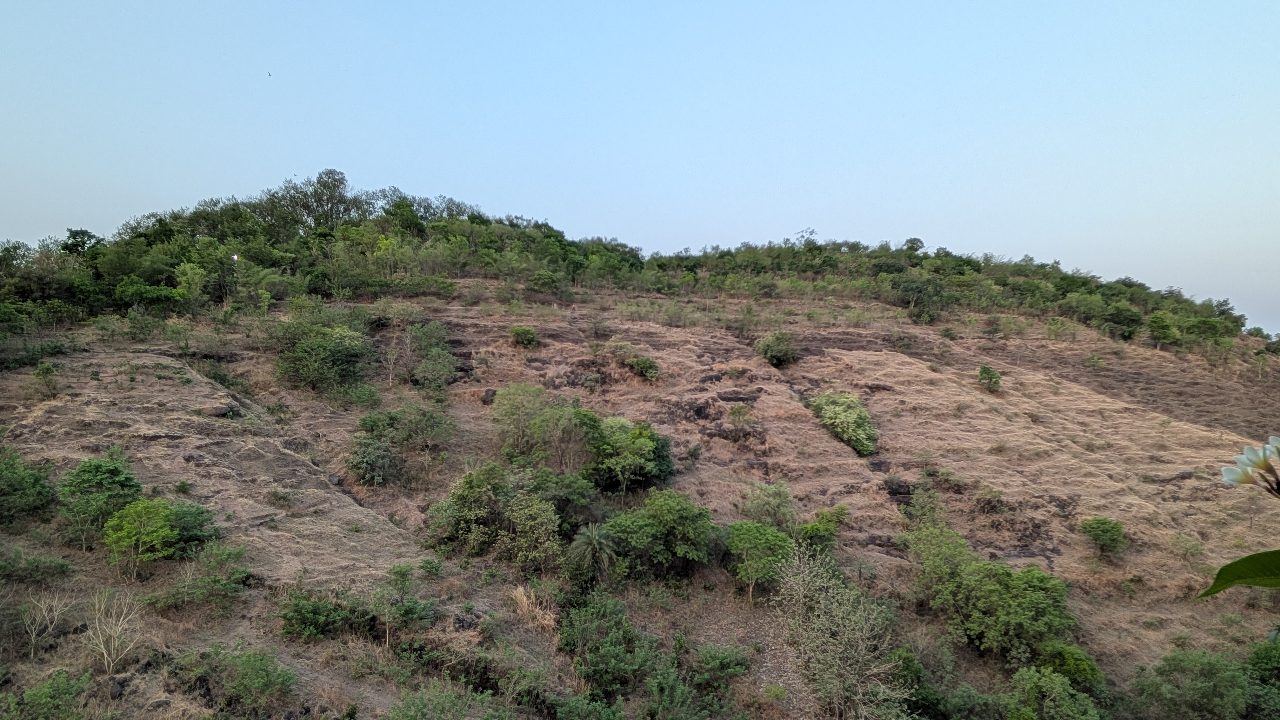
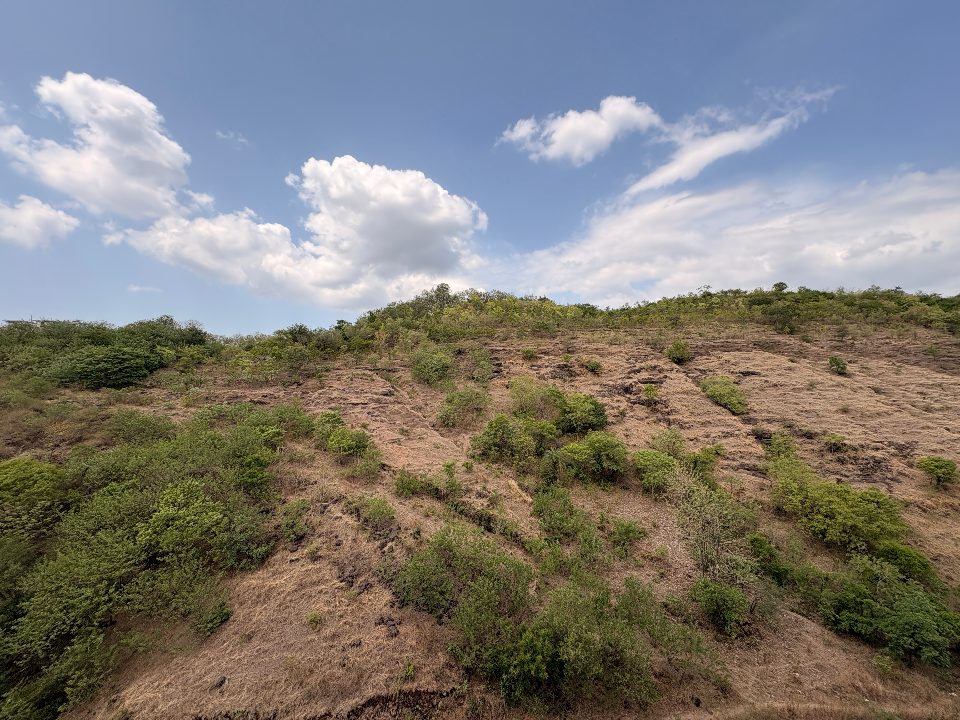
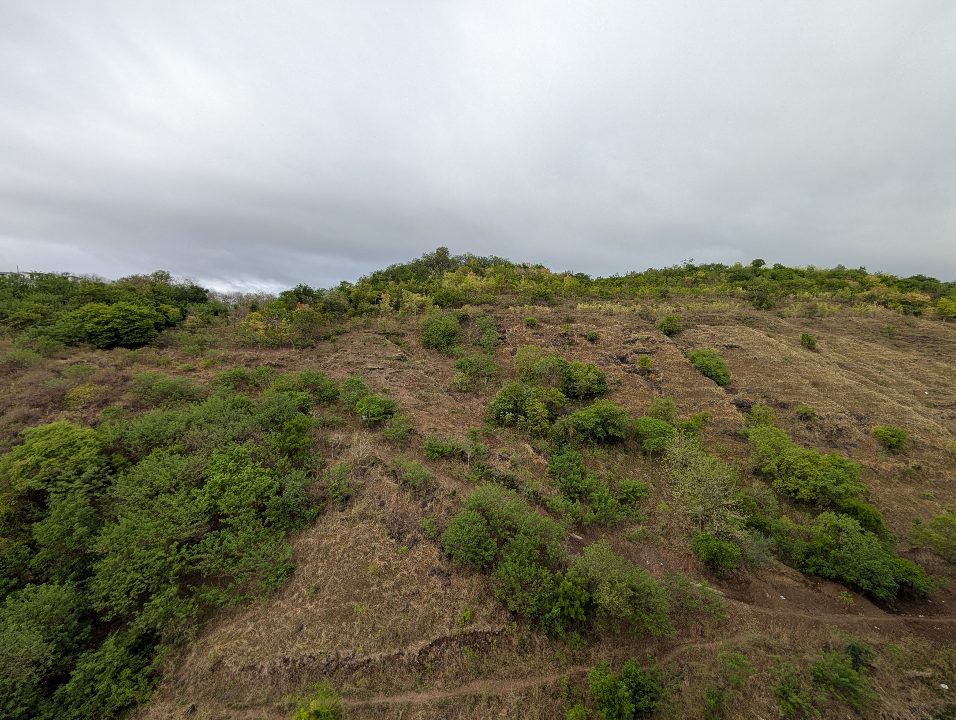
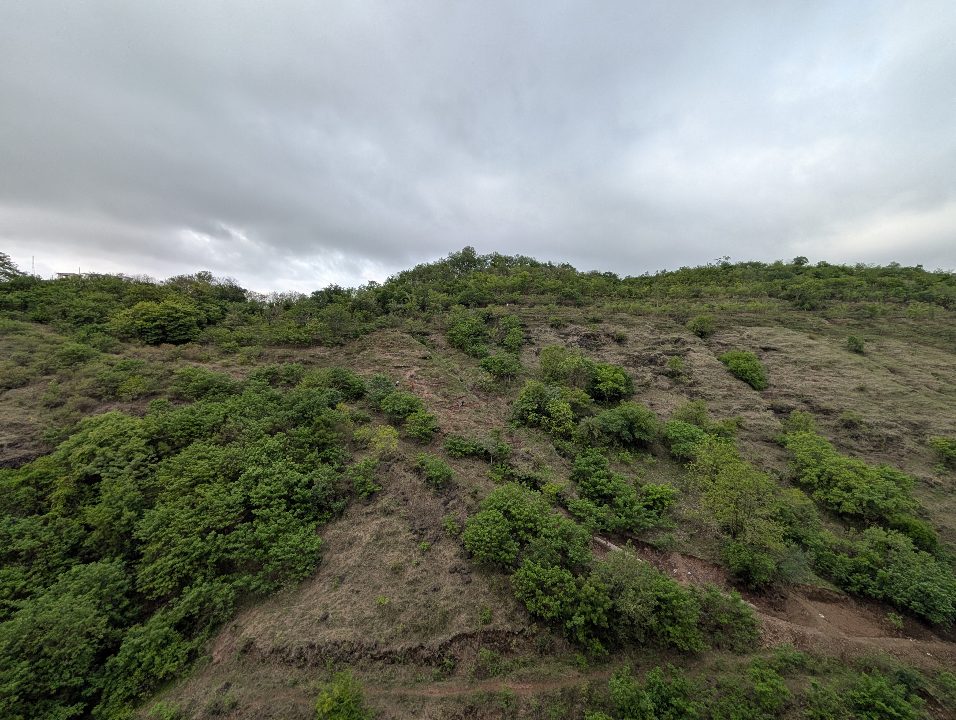
Every visit to the hill teaches us something.
Some lessons are about restoration.
Others are about ourselves.
This morning, ten volunteers came together, including five members from the Vrindavan initiative, to continue this season's plantation work.
Together, we planted 16 native trees, taking our total plantation count this monsoon to 39 saplings.
Today's plantation included:
Alongside the plantation, we also completed two new contour trenches, continuing to prepare the hillside to capture and retain more rainwater during the monsoon.
But the biggest lessons of the day came from things we hadn't planned for.
Water Always Finds Its Way
One of the newly constructed trenches taught us an important engineering lesson.
A contour trench is meant to slow down rainwater and spread it evenly along its length. However, if the trench is dug with an uneven depth, the water naturally collects at the deepest point. As the pressure builds, it begins searching for the weakest part of the bund. That's exactly what happened in the last couple of days.
Water started escaping through one end of the trench, putting a recently planted sapling at risk.

Thankfully, we noticed it in time and were able to prevent any serious damage.
The trench now needs to be properly levelled so that rainwater is distributed evenly rather than concentrating at one point.
It was a valuable reminder that even a few centimetres can make the difference between a trench working exactly as intended or becoming a point of failure.
The Hill Was Already Alive
The second lesson was even more memorable.
While digging one of the new trenches, we suddenly uncovered a living ant colony. Work stopped immediately. Until that moment, we had looked at this part of the hill as a dry, rocky slope waiting to be restored.
The ants gently reminded us that restoration had, in many ways, already begun long before we arrived.
What looked barren to us was already someone's home.
 an ant hill
We carefully secured the ant hill, adjusted our work around it and hoped that our digging hadn't disturbed its tiny residents or damaged the home they had spent so long building.
It was a humbling moment.
Conservation isn't about creating life where none exists.
It's about recognising the life that is already there and ensuring our efforts help it thrive rather than unintentionally causing harm.
Perhaps the greatest lesson the hill continues to teach us is that there is far more happening around us than we can see.


Satellite NDVI timelapse — 5 years × 6 same-month snapshots — will appear here, powered by Planet Labs imagery, showing how Baner Hill's vegetation has changed season by season.