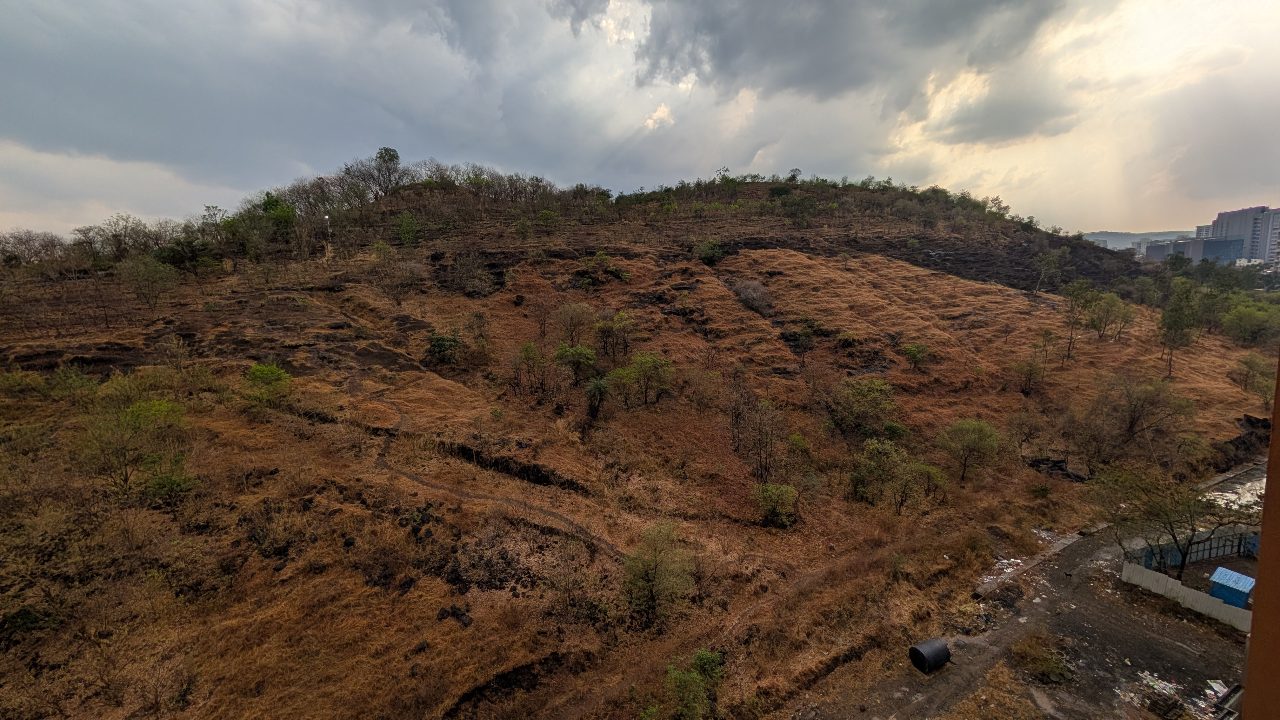
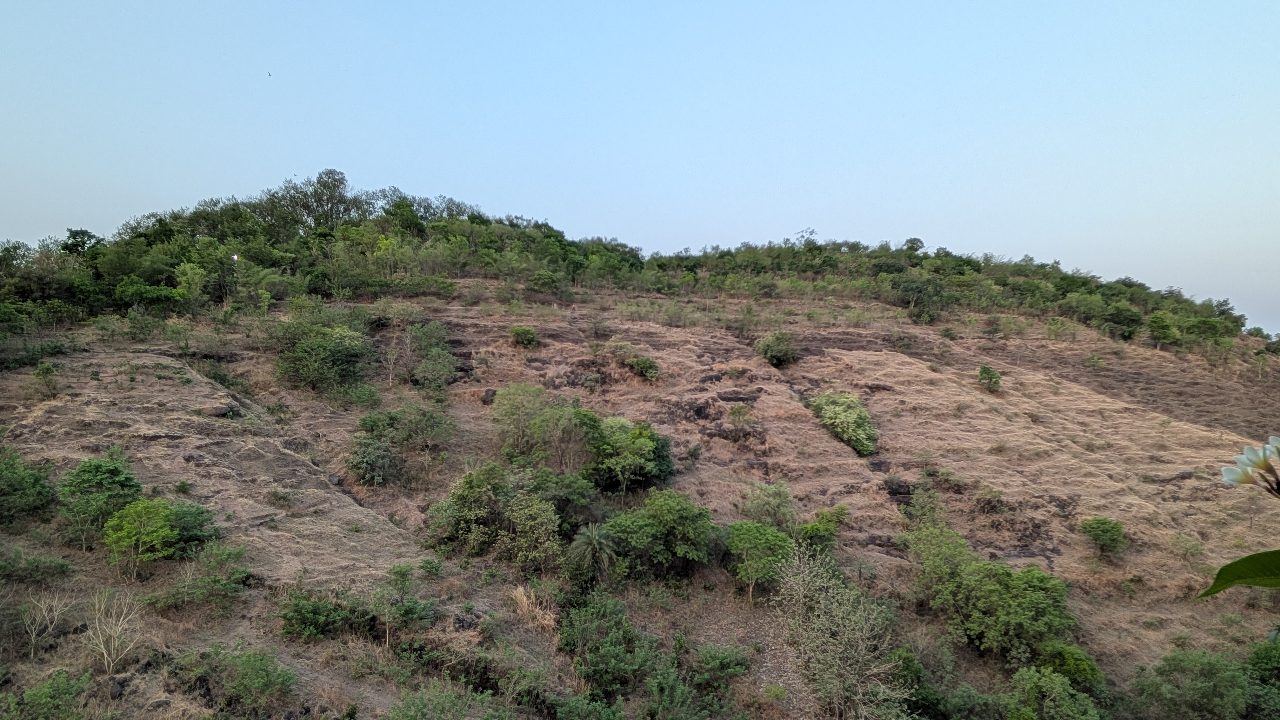
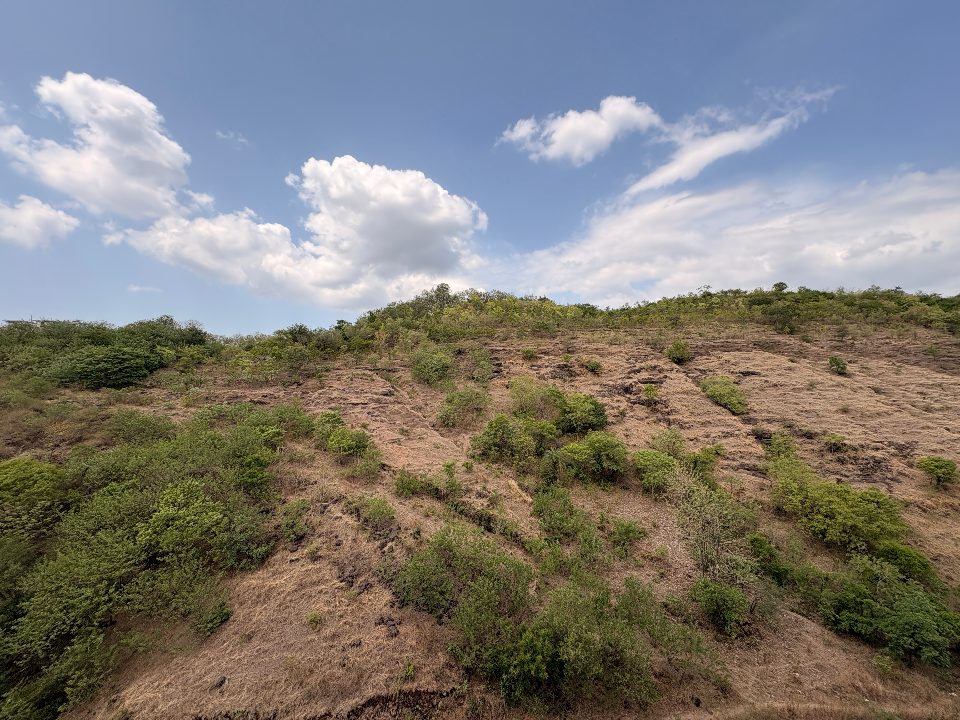
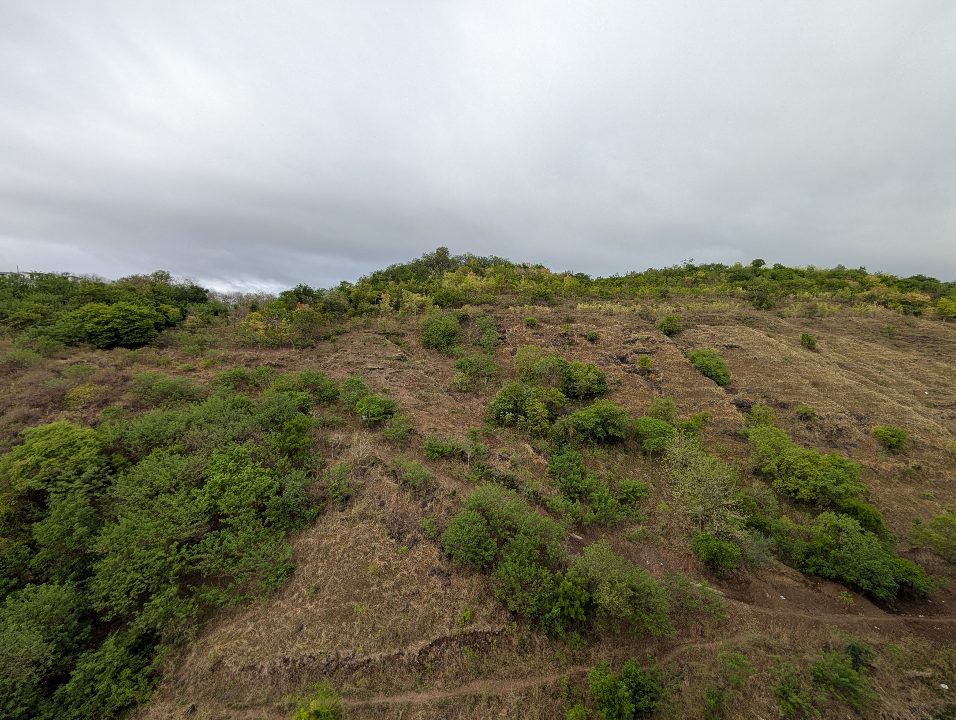
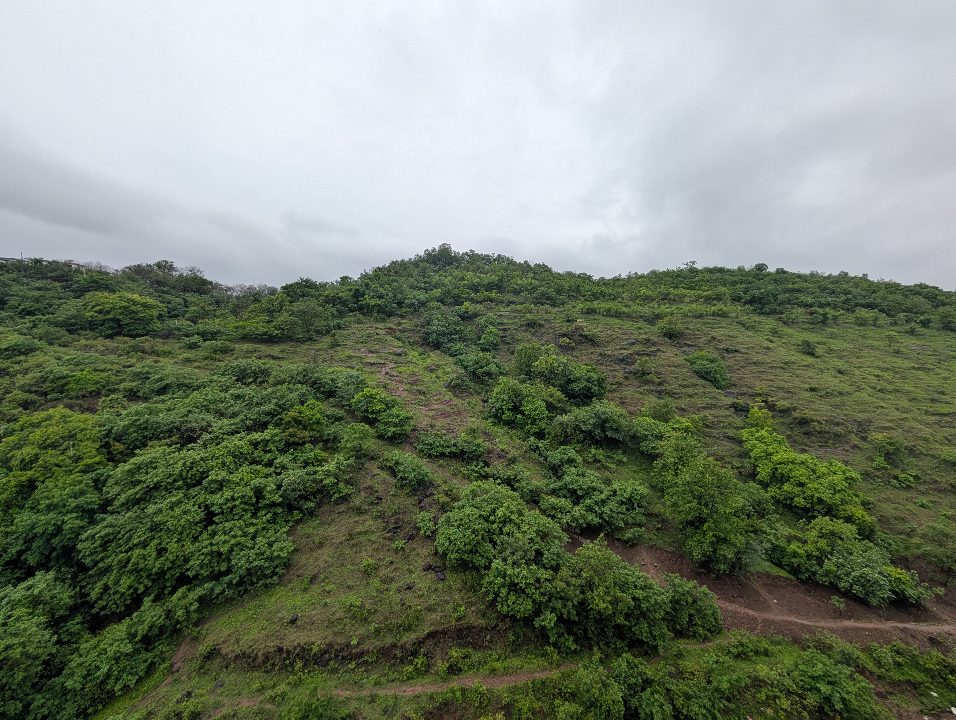
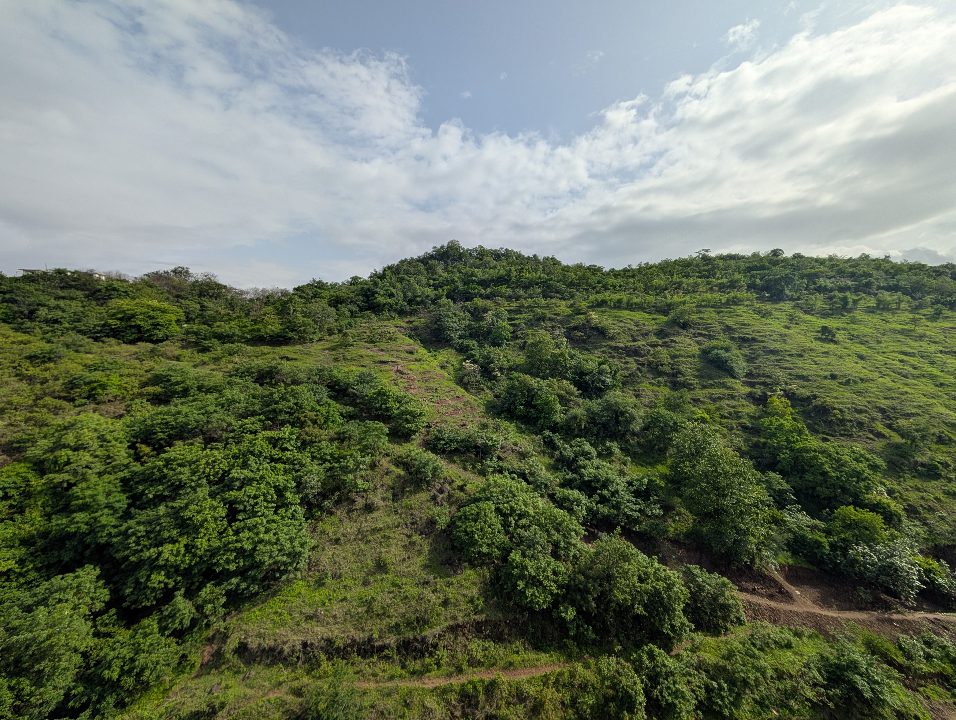
Some mornings on the hill are about getting a lot done. Some are about noticing the little things. Today was a bit of both.
Two of us began the morning's work, and over the course of the session, another seven people joined us.
Nine people, at different points of the morning, found themselves on the hillside, picking up tools, digging, talking and helping with something as simple as planting trees and caring for them.
There is something quite lovely about that. No big event. No elaborate programme. Just people coming together because they want to leave a small patch of the hill a little better than they found it.
The Hill Doesn't Make Digging Easy
We planted four new trees today and continued enhancing two of our existing trenches. The digging continues to be one of the hardest parts of this work. In several places, the rocky layer of the hill appears within just a few centimetres of the surface. The rocks are hard and stubborn, and breaking through them with hand tools takes time and a fair bit of effort.
But the young trees need space.
If we want their roots to establish themselves and give them a reasonable chance of surviving the dry months ahead, we need to provide enough depth and breadth for the root zone. So we keep digging. Sometimes a few inches at a time. Sometimes with a lot more effort than we expected.
It isn't glamorous work, but it is probably some of the most important work we are doing right now.
And Then We Saw Them
The best part of the morning came while checking some of the trees planted three weekends ago.
New leaves. Small, fresh, delicate leaves emerging from the young plants.
It is difficult to describe how satisfying that feels.
 We have spent weeks digging into hard ground, preparing pits, building trenches, carrying water and worrying about whether these little trees will actually make it. And now, they are responding. They are beginning to settle in. Beginning to find their little homes on the hill. Seeing those new leaves felt like a small victory. Perhaps the battle is half won.
The bigger battle, of course, is still ahead. They need to survive the rest of the monsoon, establish their roots, withstand grazing, and eventually make it through the long dry months.
But for today, those tiny leaves were enough. They told us that something is working.
And as more people joined us through the morning, the hill felt a little less like a restoration project and a little more like a community slowly finding its place within the landscape.


Satellite NDVI timelapse — 5 years × 6 same-month snapshots — will appear here, powered by Planet Labs imagery, showing how Baner Hill's vegetation has changed season by season.